Monday, June 28, 2010

Rent a Center v Jackson: Guest Post by Mr. Badrinath Srinivasan

Mr. Badrinath Srinivasan (Badri) has been one of the most supportive readers of this blog. He has contributed several comments on this blog and an interesting piece on amendment of applications filed under Section 34 of the Arbitration and Conciliation Act. Recently, he published a short post on The Practical Academic Blog on Rent a Center v Jackson. While signing off, he had promised to come back with further analysis on the topic soon. In this guest post, he analyses the decision in further detail. Following is the text of Badri's post.

Recently, the US Supreme Court judgement (USSC) has delivered the judgement in Rent-A-Center v Jackson (Jackson) which is probably one of the most closely followed cases in the recent times on arbitration. We had several blogs like the Contract Professor Blog, ADR Professor Blog post quite a few posts on it.

Sunday, June 27, 2010

The Indo-Pak arbitration over the Kishan Ganga project - an interesting link

We had, in a previous post, highlighted some developments in relation to the dispute between India and Pakistan over the Kishan Ganga project and how the dispute is moving towards arbitration under the Indus Treaty. The post had dealt with the appointment of arbitrators by the parties.

The Hindu carries a an opinion by Ramaswamy R. Iyer on the dispute. The authors summarises the important provisions of the Indus Treaty, provides a gist of the present dispute and discusses, at length, the different points of contention likely to be raised before the tribunal.

A must-read for everyone with anything to do with law


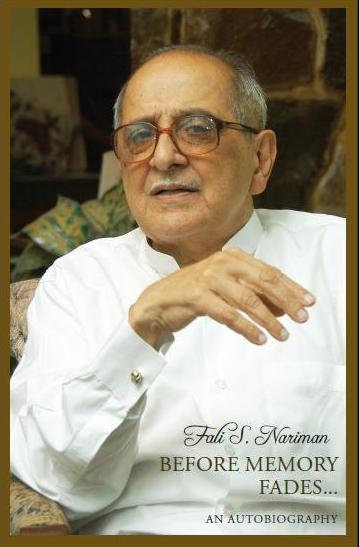
 I know that the phrase "everyone with anything to do with law" is broad in its sweep and may even include people who just consider themselves law abiding citizens. Fali S. Nariman's "Before Memory Fades" is a must-read for almost everyone, not just lawyers and law students. The language is so lucid and terms with even the slightest of technicality attached to them are explained for the benefit of readers without a background in law. The narrative is compelling and often humorous. 

The book is meant to be an autobiography and is a strikingly honest one at that. The honesty of the narrative is evident when he discusses his appearing for Union Carbide in the cases that followed the Bhopal gas tragedy. Many including Prof. Upendra Baxi believed that the man who had till then taken a strong stand for human rights, especially by resigning as the Additional Solicitor General of India upon the proclamation of internal emergency, should not have accepted the brief. Many expressed their discontent in very bitter terms in public fora and Prof. Baxi even announced years later that he had made a conscious decision to not share any public forum with Nariman after his appearance for Carbide. Nariman had responded to these statements and writings through his own writings. He refuses to engage in any further discussion of the episode in his autobiography other than reproducing the complete text of all these communications on the matter. Moreover, he deliberately reproduced Prof. Baxi's email at the end of the chapter, giving his opponent the last word in interest of fairness. Whether Nariman's stand in the entire episode was justified or not, I believe that the treatment of the subject in the book is impeccable. Similarly he says that the Second Judges case (Supreme Court Advocates on Record Association v Union of India) was a case he won, but would have preferred to have lost.

Wednesday, June 23, 2010

GoI to shun the "litigation giant" tag: Moily promises to be good to arbitration

   In a late realisation that the Government of India was contributing an unnecessarily huge bundle of cases to the already sky-high pile of pending cases, the Law Minister Veerappa Moily has released a National Litigation Policy. Times of India reports here that the Central Government and the state Governments contribute 70% of the 3 crore cases pending in various courts in India. The Policy states that its aim is to "transform Government into an Efficient and Responsible litigant". The policy goes on to state that Government should cease to be a "compulsive litigant" and should discard the current "Let the court decide" attitude.

Sunday, June 20, 2010

New Arbitration Law in the offing for UAE

The UAE Ministry of Economy has released a draft of the Federal Arbitration Law for consultation, which, replacing the provisions of the Civil Procedure Code regarding arbitration, is likely to be enacted within a year, with minor amendments and absent strong objections.

The scope of this proposed law is quite wide, covering arbitrations governed by UAE procedural law as well as rules of the arbitral centre under which arbitration is being conducted. UAE has, as yet, not adopted the UNCITRAL Model Law on International Commercial Arbitration and the draft law is largely based on the Egyptian arbitration law.

Some events of interest

I wish to highlight two events organised by the International Chamber of Commerce which may be of interest to the readers.


1. Webinar on Revision of ICC Arbitration Rules.
The details of this event have been posted on the Indian Corporate Law Blog. The interactive webinar will be held on June 23, 2010 at 4:00pm (GMT+2). The speakers will include  Mr. Jason Fry, the Secretary General of ICC and Ms. Francesca Mazza, Counsel and Secretary to the ICC Commission on Arbitration. For registration and further details please visit the official site of the event.

Thursday, June 17, 2010

India appoints Vice President of ICJ, Swiss Expert as arbitrators in Indus water dispute


We had drawn your attention to a post on Practical Academic regarding India and Pakistan resorting to arbitration regarding the Indus river water dispute. The post mentioned that Pakistan had appointed Prof. Jan Paulsson and Judge Bruno Simma as its arbitrators.

The Hindu reports that India has appointed Judge Peter Tomaka and Prof. Lucius Caflisch as its arbitrators. Judge Tomka, who was born in Slovakia, became a Member of the International Court of Justice on February 6, 2003 and was elected the Vice President in 2009. Prof. Caflisch is a former legal advisor of the Federal Department of Foreign Affairs of Switzerland. He is presently a member of International Law Commission and the Special Rapporteur to the Commission on the topic "Effects of Armed Conflicts on Treaties".

The four party appointed arbitrators are to choose the presiding arbitrator. With the Vice President of ICJ and Judge Simma on the panel, I am eagerly waiting to see who will be picked to preside over the panel.

Monday, June 14, 2010

Camel's nose under the tent: should courts interfere with arbitrations under BITs?

In the previous post, I had promised I would deal with this topic soon. In the meanwhile, Mr. Prabhash Ranjan and Mr. Daniel Mathew have published a post on Law and Other Things as to how the proposed amendments do not serve to protect investment arbitration in India from interference by courts. In this post, I examine the more fundamental question of whether domestic courts in India, which have taken an expansionist view of their own powers in respect of arbitration in general, should extend that stand to investment treaty arbitrations too.

Saturday, June 12, 2010

Revenge time: Arbitral tribunals strike back at national courts?


National courts in different jurisdictions have, for long, jealously guarded their monopoly in adjudication. In this process they have sought to keep private adjudication mechanisms including arbitration under their strict control. We have had some discussions on how Indian courts have interpreted the statute to give themselves larger powers over arbitral tribunals. Now, it seems the arbitral tribunals are striking back at courts by holding sovereign States liable under Bilateral Investment Treaties for anti-arbitration decisions taken by their courts.

Monday, June 7, 2010

IBA Rules on Taking of Evidence

The International Bar Association one of the leading organisations of international legal practitioners, bar associations and law societies in the world, recently approved a new version of its Rules on the Taking of Evidence in International Arbitration. These superseded the earlier rules published in 1999. The IBA Rules are often adopted by parties to international commercial arbitrations to govern procedures regarding expert statements, witnesses and other forms of evidence.

The Working Party consisted, among others, of distinguished scholars such Emmanuel Gaillard and Jan Paulsson to name a few.

The new Rules have a wider scope than the 1999 Rules on Taking of Evidence in International Commercial Arbitration, by deletion of the word "commercial"; these rules may now be applied in investment arbitrations as well.

The principle of good faith is firmly entrenched in these rules by an express reference to the same in the Preamble and Article 9, regarding admissibility of evidence.

An obligation is cast upon the tribunal, by virtue of Article 2, to consult parties on taking evidence with a view to agreeing on an efficient, economical and fair process for the same.
Updating itself with technological advancement, the Rules also give details regarding electronic forms of documents in Article 3. Similarly, Article 8 of the new rules provide for video-conference and similar technology.


Greater confidentiality is provided to documents produced, whether by parties, or on request. This can be seen by reference to confidentiality in various provisions of the rules.


Articles 5 and 6 contain important new provisions regarding party-appointed and tribunal-appointed experts, whose independence from the parties and the tribunal is stressed.

Thursday, June 3, 2010

Country-wise statistics on investment treaty arbitration

UNCTAD has released an "IIA Issue Note" titled "Latest Developments in Investor–State Dispute Settlement". A  summary of the Note can be found at the Kluwer Arbitration Blog.

What interests me the most in this report is a respondent country-wise tabulation on the number of "known - investment treaty claims". Argentina tops the list with 51 claims having been initiated against it so far. Mexico comes second with 19 claims and Czech Republic third with 16 claims. The first time a developed country appears in the list is Canada and United States on the fifth position with 14 cases each. There have been 9 cases against India. The statistics may indeed lend some support to the concerns raised by developing nations that investment treaty arbitration is increasingly being used to their prejudice.

We will soon try to tabulate these cases based on whether the respondent was a developed country or a developing country and what the outcome of the arbitration was.

Tuesday, June 1, 2010

Agreement between ACICA and PCA


We had recently discussed changes in the arbitration law of Australia. The Australian Centre for International Commercial Arbitration (ACICA) is taking further strides in the field of arbitration. It recently signed an agreement with the Permanent Court of Arbitration (PCA) to promote the utilisation and education of arbitration in the Asia-Pacific region.

The PCA is the world's oldest inter-governmental organisation for international dispute resolution. This agreement would go a long way to improve the functioning of the PCA in the Asia-Pacific and foster arbitration in general, in the region.

Details of the agreement were announced a week ago just before the commencement of the International Council for Commercial Arbitration (ICCA) Global Congress.

More details on this landmark agreement can be found here.

Monday, May 31, 2010

An Interesting Link on Arbitration of Indus River Water Dispute

Practical Academic Blog has come up with a comprehensive analysis of the India Pakistan dispute over Indus river water. As the matter is on the path to arbitration, the readers may find the post interesting.

Sunday, May 30, 2010

Bhatia will survive the amendments: Anyone in mood for a bet?

Rukmini had discussed in a previous post how the proposed amendments to the Arbitration and Conciliation Act would negate the basis of the decision in Bhatia. It just dawned on me what a bench of the Honourable Supreme Court of India is likely to say if confronted with the S. 2(2) as proposed to be amended. Well, as Justice Holmes puts it, study of law concerns nothing but “prophecies of what the courts will do”. So here goes my prediction.

Some background to the prediction:
The text of S. 2(2) [unamended] reads: "This Part shall apply where the place of arbitration is in India". The Supreme Court in Bhatia held that this is not equivalent to "This Part shall apply only where the place of arbitration is in India". 

The Section, after the proposed amendment will read, “2.(2) (a) Save as otherwise provided in clause (b), this Part shall apply where the place of arbitration is in India. (b) Sections 8, 9 and 27 of this Part shall apply to international arbitration (whether commercial or not) where the place of arbitration is outside India or where such place is not specified in the arbitration agreement.” It is pertinent to note that though the consultation paper proposes the addition of the word "only", the Bill as it stands now reads the way I have quoted.

What a reasonable reader would infer:
In this context the word "reasonable" has been used as we use it in the context of "reasonable man". This is not to attribute unreasonability to honourable courts for adopting a different reading from what I call the "reasonable reader" would adopt.

To a reasonable reader it would appear from the insertion of the words "Save as otherwise provided in clause (b)" and from the fact that S.2(2)(b) makes Sections 8, 9 and 27 applicable specifically to arbitrations held outside India as well, that provisions of Part I other than those named in S.2(2)(b) will not apply to arbitrations held outside India.

But, the reasonable reader is not much of an assistance when it comes to predicting judicial behaviour in context of arbitration in India. I would say that a reasonable reader would, while reading unamended Section 2(2), have supplied the word "only" and confined the application of Part I to arbitrations held in India alone.
What those exercising exclusionary reasons will say - the prediction:
I remember studying in jurisprudence that a court of law exercises exclusionary reason. That is, once a matter is decided by it, the reasons agitated before it become irrelevant and the only reason for the validity of a legal proposition becomes the fact that it has been upheld by the authority. So, our reasonable reader and her reasoning will no more be relevant except for academic purposes the day a court exercises its exclusionary reason. Here is my prediction on what the courts will say and based on what reasons:

"Even while amending Section 2(2), the legislature has not included the word "only". If the legislature, which was fully aware of the decision in Bhatia and the fact that the decision hinged on the absence of the word "only" in S.2(2) did not insert the word "only" even during its amending exercise, no legislative intent can be inferred that the statute depart from the position laid down in Bhatia. This takes us to the question of what the effect of the amendment is. It is our considered view that while adhering to the position in Bhatia, the legislature additionally provided for mandatory application of Sections 8, 9 and 27. Therefore, the current position of law in this regard is - (i) Whole of part I applies mandatorily where the place of arbitration is in India; (ii) All provisions of Part I except Sections 8, 9 and 27 apply to arbitrations held outside India if not specifically excluded by the contract between the parties; (iii) Sections 8, 9 and 27 apply mandatorily to all arbitrations whether held in India or abroad."

Any one in mood for a bet? I will enter into the bet only if the agreement to bet is NOT governed by the laws of India (or any other country where wagers are unenforceable) AND any disputes arising out of or in connection with the bet are subject to arbitration with its seat outside India AND lex arbitri not being Indian law.


Friday, May 28, 2010

Binding non-signatories to arbitration

Binding non-signatories to an arbitration agreement to arbitral proceedings has always been an unsettled issue in several countries of the world. Here, we take a look at the Indian law on third parties to arbitration agreement.

Leaving aside the fundamental principle of privity of contract, an arbitration agreement is bound by the consent of the parties and must fulfill the requirements of an arbitration agreement defined in Article 7 of the UNCITRAL Model Law on International Commercial Arbitration, embodied in section 7 of the Indian Arbitration and Conciliation Act, 1996. This provision has been incorporated into legislation of most major jurisdictions of the world.

There are several theories for binding a non-signatory to an arbitration agreement in international arbitral practice. These include the ‘group of companies’ doctrine, lifting the corporate veil, equitable estoppel, agency and the alter ego doctrine. The tests for these often overlap, thus, in fact, more than one justification can be found for binding a non-signatory to an arbitration agreement.

Not all theories are accepted in all jurisdictions. The usual justification for looking beyond the signatories to the agreement is that consent is implied in those circumstances. Moreover, Article 7 of the Model Law although requiring an arbitration agreement to be in writing, does not mandate signature of the parties. Moreover, the standard for binding non-signatories is higher in common law countries than the civil law ones. This is because privity is an essentially common law concept and civil law jurisdictions stress on the principles of good faith and equity.

Under English law, thus, we can see that the ‘group of companies’ doctrine has been rejected [Peterson Farms v. C & M Farming]; the corporate veil is pierced only in exceptional circumstances such as when the company in question is a façade or sham [see Adams v Cape Industries Plc.] and, together with control over the signatory company, there existed a degree of impropriety [see Hashem v. Shayif].

The corporate veil has been lifted on several occasions by the Indian judiciary, however, those have been in context of taxation, contract or company law [see New Horizons Ltd. v Union of India, Delhi Development Authority v Skipper Construction Co., State of U.P. & Ors. v Renusagar Power Co. & Ors., Life Insurance Corporation of India v Escorts Ltd.]. Arguably, if rights or liabilities under a contract can be extended to non-signatories, the same may be extended to arbitration clauses as well. Moreover, Indian courts have been known to follow English common law decisions, especially where (as in this case) statutory provisions are almost identical.

In the recent Supreme Court decision Indowind Energy Ltd. v. Wescare (I) Ltd. & Anr. [discussed at the Indian Corporate Law Blog], the analysis of the Court centred around the textual interpretation of section 7 of the Arbitration and Conciliation Act, 1996. The Court undertook a “plain, simple and normal reading of section 7 of the Act”. Further, it held that­ if the signatories to the arbitration agreement had intended that a third party would be bound by the agreement, they would have so specified while signing the agreement.

None of the documents exchanged between the appellant and first respondent referred to the arbitration agreement entered into between the two respondents. U.S. decisions relied on by first respondent were rejected since the statutory provision in India was substantially different from that in the United States. Admittedly, the cases cited by first respondent were only from the United States and no decisions upholding a similar point of law from England were cited by respondent. However, this should not have stopped the Court from relying on English decisions on this point, especially since statutory provisions in England and India are both lifted from the UNCITRAL Model Law.


Until this decision on April 27, 2010, one could have safely assumed that non-signatories could be bound to an arbitration agreement in India by lifting the corporate veil, albeit, in extraordinary circumstances. This decision goes against the general international trend and yet again proves that arbitrating in India is becoming less and less predictable.

Ireland, Scotland pass new arbitration laws

President Mary McAleese of Ireland signed the Arbitration Act  2010 on 8th March 2010.  The Act is to come into force on 8th June 2010. The final version of the Bill can be found here.


Another recent legislation on arbitration, Arbitration (Scotland) Act, 2010 can be found here.

Wednesday, May 26, 2010

NLS arbitration moot : results

As we have been refraining from putting up detailed posts on account of being busy with the NLS arbitration moot, I thought I would post the results of what is arguably the most reputes arbitration moot in the country. NUJS won the moot for the third consecutive time in a row. In addition, we won the best memorial award and the second best speaker award. The best speaker award was won by Shruti Chandrashekharan from NALSAR. NALSAR also bagged the second best memo and second best team awards. The NUJS team consisted of, in addition to the two contributors of this blog, Mr. Sankarshana Meeyala and Ms. Pankhuri Agarwal. We congratulate the NALSAR team for the fight they put up in the finals and NLS for the wonderful event, especially in terms of the well drafted problem and the commendable judging standards.


Our performance was great news to us especially because of the circumstances that prevailed. To begin with, this was Rukmini's first moot as a speaker though she has done several before as a researcher. It was the first ever moot for Sankarshana and Pankhuri. Also, the moot problem released when our exam schedule had already been out and we were in the middle of our preparations. The exams got over on the 13th of May and the memorial submission (after an extension) was on the 18th. I was scheduled to start interning with a reputed law firm in Mumbai on the 17th. So, I left Kolkata (and my team) on the 14th and wrote most of my part of the memorial in my train to Mumbai based mostly on whatever I could recall of sale of goods and arbitration from earlier moots and classes rather than the luxury of fresh research. Rukmini had a tough time collating the drafts of the memorial all alone and barely managing to complete the submission on time. To add to all this, I went to office on Friday till lunch break (on account of my own being a bit crazy; the firm did not want me to), took the night flight to Bangalore, read the completed memorial and the ancillary documents for the first time in the plane and started speaking on Saturday. Considering all these factors, I am really excited about our performance. However, we did not get much opportunity to express the excitement, given that the results were announced at 5:30 and I had to leave for the airport at 6:00.

[In the course of a session]

There was one argument in this moot I really cherish. This idea hit me while packing our bags for the semi final round against GNLU. The other side was required to argue that the transaction in question was licensing of software and not sale and hence Sections 15 and 16 of the Sale of Goods Act does not apply. This argument was based on the premise that for a sale, title in the good must have passed and in this case there was no passing of title given the extensive restrictions and limitations placed on the use of the software by the alleged buyer under the contract. I picked up our copy of Mulla on Sale of Goods opened to the front cover and read out the copy right warning. I asked, "if the title in this copy of this book passed to me for consideration despite the restrictions and limitations imposed by the copyright warning, what is your basis to say that the title in the software did not pass to the claimant due to the restrictions and limitations imposed by the contract?" This seemed to work fine and I repeated it with success in the finals as well. I think the best part about this line of argument was that it appealed to common sense rather than to the technicalities of law.


[With the NALSAR team]


We thank all those who helped out in the process - George Varghese, Iram Huq and Vivek Menon for helping Rukmini pick up the basics of public speaking; Amrita Biswas for helping with the memorial; some associates of the firm I am interning with for being extremely supportive, Indian Railways for the place where the memo was written, publishers of Mulla on Sale of Goods for the stringent copyright warning, etc.

We will resume regular posts soon. Now that the technical issues with Blogspot have been resolved, Lex Arbitri will soon bring you fresh updates on arbitration in India and abroad.

Thursday, May 20, 2010

Draft Restatement on International Commercial Arbitration accepted by the ALI annual meeting

I had stated in a previous post that ALI would debate Restatement (Third) of the United States Law of International Commercial Arbitration on Tuesday. The annual meeting has approved Draft 1 which contains Chapter 1 (definitions) and Chapter 5 (recognition and enforcement of arbitral awards). A report can be found on the ALI blog. 

Wednesday, May 19, 2010

Some Interesting Links

1. Readers of Lex Arbitri do not need an introduction to Mr. Badrinath Srinivasan, thanks to his regular comments on our posts and the recent guest post he contributed. Here is an interesting piece from him on a recent Supreme Court judgment regarding the practice of PSUs appointing their own employees as arbitrators.

2. This link has nothing to do with arbitration, well almost nothing. Recently when Prof. Shamnad Basheer wrote  a post on SpicyIP about the bar examination, he drew a link between the topic and IP saying IP lawyers form a part of the larger fraternity of lawyers. I will do the same here, as arbitration lawyers too form a part of that larger fraternity. Recently Prof. Basheer launched a revolutionary project to make legal education more accessible to the less privileged (You may call him a dreamer, but he is not the only one - Already about 100 students and lawyers have come forward to support the initiative). It goes by the name IDIA - Increasing Diversity through Increasing Acccess to legal education. Today, IDIA launched a blog, imaginatively titled IDIALLY . All are requested to take a look and extend support to this noble venture.

Monday, May 17, 2010

Guest Post: Permissibility of amendments to applications under S. 34 of the Arbitration and Conciliation Act - Supreme Court disagrees with the AP High Court's position in Satyam v Venture

I had discussed in an earlier post the decision of the Andhra Pradesh High Court in the Satyam Venture dispute that no application under Section 34 can be amended after the limitation period for filing such application has passed. I had argued that this amounted to judicial law making and had no statutory basis. Badri Srinivasan, a reader of our blog brought to our attention a recent judgment of the Honourable Supreme Court on the same point that takes a stand diametrically opposite to the position advocated by the AP High Court. In the following paragraphs, Badri provides a summary of the decision and highlights the portions relevant to the question of whether an application under Section 34 can be amended after the limitation period to file the application has passed. This decision is of interest especially given that the Satyam venture dispute is soon making its second trip to the Apex Court.

Badri is an alumnus of NUJS and currently works for a corporation. He writes on a wide range of topics on the Practical Academic blog.

Here goes Badri's post:

RV Raveendran & RM Lodha, JJ.
01.04.2010
Civil Appeal No. 2928/ 2010 (Out of SLP (C) No. 3937/ 2009)
MANU/SC/0215/2010

The State of Maharashtra (SOM) and Hindustan Construction Company (HCC) entered into an agreement in 1992 for construction by HCC of some civil works. Certain disputes arose between the parties, which were referred to an arbitral tribunal. The arbitral tribunal rendered the award in 2003. SOM applied to the court to set aside the award. The District Court rejected SOM’s application. An appeal was filed before the High Court of Bombay on 6th February 2007. More than a year after the filing of the appeal, on 23rd June 2008, SOM applied to the said court for allowing amendment of the memorandum appeal.

The court had to decide whether such an appeal adding additional grounds challenging the award is allowable notwithstanding the fact that S 34(3) allows a party to file an application for setting aside the arbitral award within a maximum period of three months plus 30 days.

A brief summary of the decision of the Supreme Court is given below|:

1.         Amendment of pleadings is a matter of procedure. Granting leave for amendment             is a matter of discretion of the court, to be exercised based on settled principles.
2.         Amendments which evade the laws of limitation shall not, as a rule, be allowed.    However, even such amendments may be allowed in the interests of justice
4.         The above stated principles would apply even in case of memoranda of appeal.
5.         The period allowed for filing petition under S 34 is prescribed by S 34(3) and is     not extendable.

6.         However, amendments to file additional grounds may not always amount to filing             fresh application. If that is so, no material or relevant ground for setting aside             award may be added.
7.         Under S 34(2)(b), if the court finds that the award deals with a dispute that           is not arbitrable or if the award is against public policy. The wordings of S     34(2)(b) allow the court to grant leave for such amendments even after the period   prescribed in S 34(3).
8.         Every amendment in an application for setting aside an arbitral award cannot be    taken as a fresh application.

The court, unlike the AP HC in Satyam v. Venture Engineering seems to allow amendments adding additional grounds to an application for setting aside an arbitral award:
(a)        where justice demands it or
(b)        where such amendments do not amount to filing a fresh application.

[In Satyam v. Venture Engineering, the AP HC had made a blanket prohibition against amendments to S 34 petitions beyond period specified in S 34(3).]

Considering the structure of the Arbitration and Conciliation Act, 1996 and the liberal attitude of the courts in allowing amendments to pleadings, the court should sparingly and only when the situation absolutely demands it allow such amendments. It must also be noted that an award cannot be enforced if an application is filed for setting aside an award (S 36). Hence, a court should ideally decide a S 34 petition as soon as possible and should ensure there is no delay in finally deciding on the matter. The Court should have strictly gone by the well-established legal principle: What cannot be done directly cannot be indirectly. However, Instead the court seeks to employ a test that, I believe, is nebulous, and would result in courts allowing amendments akin to what was done with Order VI Rule 17. I would only quote the following portion of the Supreme Court’s decision in Revajeetu Builders and Developers v. Narayanaswamy and Sons and Ors.:

31. In a recently published unique, unusual and extremely informative book "Justice, Courts and Delays", the author Arun Mohan, a Senior Advocate of the High Court of Delhi and of this Court, from his vast experience as a Civil Lawyer observed that 80% applications under Rule VI Order 17 are filed with the sole objective of delaying the proceedings, whereas 15% application are filed because of lackadaisical approach in the first instance, and 5% applications are those where there is actual need of amendment. His experience further revealed that out of these 100 applications, 95 applications are allowed and only 5 (even may be less) are rejected. According to him, a need for amendment of pleading should arise in a few cases, and if proper rules with regard to pleadings are put into place, it would be only in rare cases. Therefore, for allowing amendment, it is not just costs, but the delays caused thereby, benefit of such delays, the additional costs which had to be incurred by the victim of the amendment. The Court must scientifically evaluate the reasons, purpose and effect of the amendment and all these factors must be taken into consideration while awarding the costs.
…
According to the view of the learned author Arun Mohan as observed in his book, although the proviso has improved the position, the fact remains that amendments should be permissible, but only if a sufficient ground therefore is made out, and further, only on stringent terms. To that end, the rule needs to be further tightened”.

In fact, as the said judgement notes, in 1999 Order VI Rule 17 was proposed to be deleted in on recommendations by the Justice Malimath Committee. However, due to protests from the Bar, the said provision was left unamended except for a proviso, which read:

“Provided that no application for amendment shall be allowed after the trial has commenced, unless the Court comes to the conclusion that is spite of due diligence, the party could not have raised the matter before the commencement of trial.”

On the other hand, taking an absolute view that no amendments should be permitted (as the AP HC did) may also lead to unwarranted results. For example, additional grounds that have been discovered post-expiry of limitation under S 34(3) have to be allowed. Hence, proper balancing needs to be done. It would have been better if the court had more clearly defined the circumstances that might warrant allowing such amendments. The point is that when the court allows new grounds to be added "in the interests of justice".

As a general rule in case of adding additional grounds beyond the period specified in S 34(3) should be strictly dealt with. I only cite certain provisions to state that the Act does not give a second chance to do what one had not done in the first instance. For example, in case you contend in your S 34 petition that the arbitration agreement suffered some incapacity, you'll have to make objection to the tribunal first. If the tribunal rejects such contention, you may make it subsequently before the setting aside court. S 4 is another example. What these provisions tend to do is that it negates all "afterthought"-contentions and reduce the time for settlement of the dispute finally.

As far as amendments which are not in the nature of additional grounds, they may be less strictly viewed and the directions given in Revajeetu Builders and Developers v. Narayanaswamy and Sons and Ors may strictly be followed, relevant portions of which are quoted herebelow:

“65. The Courts have consistently laid down that for unnecessary delay and inconvenience, the opposite party must be compensated with costs… The costs cannot and should not be imposed arbitrarily. In our view, the following parameters must be taken into consideration while imposing the costs. These factors are illustrative in nature and not exhaustive.
(i) At what stage the amendment was sought?
(ii) While imposing the costs, it should be taken into consideration whether the amendment has been sought at a pre-trial or post-trial stage;
(iii)The financial benefit derived by one par- ty at the cost of other party should be properly calculated in terms of money and the costs be awarded accordingly.
(iv) The imposition of costs should not be symbolic but realistic;
(v) The delay and inconvenience caused to the opposite side must be clearly evaluated in terms of additional and extra court hearings compelling the opposite party to bear the extra costs.
(vi) In case of appeal to higher courts, the victim of amendment is compelled to bear considerable additional costs.
All these aspects must be carefully taken into consideration while awarding the costs.

66. The purpose of imposing costs is to:
a) Discourage malafide amendments designed to delay the legal proceedings;
b) Compensate the other party for the delay and the inconvenience caused;
c) Compensate the other party for avoid- able expenses on the litigation which had to be incurred by opposite party for opposing the amendment; and
d) To send a clear message that the par- ties have to be careful while drafting the original pleadings.
…
[S]ome basic principles emerge [] ought to be taken into consideration while allowing or rejecting the application for amendment.
(1) Whether the amendment sought is imperative for proper and effective adjudication of the case?
(2) Whether the application for amendment is bona fide or mala fide?
(3) The amendment should not cause such prejudice to the other side which cannot be compensated adequately in terms of money;
(4) Refusing amendment would in fact lead to injustice or lead to multi- ple litigation;
(5) Whether the proposed amendment constitutionally or fundamentally changes the nature and character of the case? and
(6) As a general rule, the court should decline amendments if a fresh suit on the amended claims would be barred by limitation on the date of application.”

To paraphrase the caution which the Supreme Court in Revajeetu Builders and Developers v. Narayanaswamy and Sons and Ors gave, the decision on an application made for amending a S 34 petition is a very serious judicial exercise and the said exercise should never be undertaken in a casual manner.
counter on blogger