Showing posts with label Book Review. Show all posts

Monday, October 11, 2010

Book of the Month - Justice R.S. Bachawat's Law of Arbitration and Conciliation

Following the overwhelming reception that Vindobona Junction has received, Lex Arbitri is launching a new Section called 'Book of the Month'. In this section, we seek to introduce to our readers one book per month dealing with arbitration law or related areas. The readers, authors or publishers may nominate books by emailing deepakelanthoor@gmail.com.


Justice Bachawat's treatise is to arbitration law what H.M. Seervai's is to Constitutional law, albeit much easier to use. The fifth edition of the book lives up to the reputation of the original work and incorporates the latest developments.

The book contains section-wise analysis of the Arbitration and Conciliation Act, something which most Indian treatises on arbitration have. However, what sets it apart is (i) the depth of research reflected in the large number of case laws cited in the book, (ii) an accurate description and clear analysis of latest developments  and (iii) the ease with which even a beginner in the subject can use the book, making it useful for practitioners, law students, teachers, academics and almost anyone interested in the subject.

Sunday, June 27, 2010

A must-read for everyone with anything to do with law


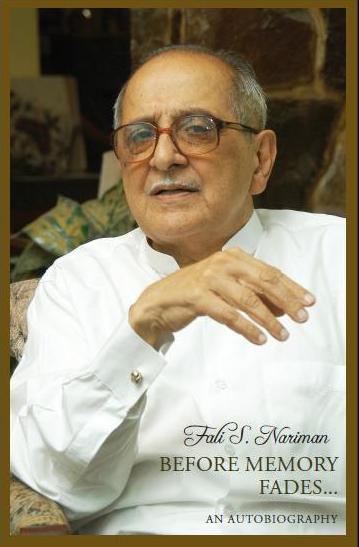
 I know that the phrase "everyone with anything to do with law" is broad in its sweep and may even include people who just consider themselves law abiding citizens. Fali S. Nariman's "Before Memory Fades" is a must-read for almost everyone, not just lawyers and law students. The language is so lucid and terms with even the slightest of technicality attached to them are explained for the benefit of readers without a background in law. The narrative is compelling and often humorous. 

The book is meant to be an autobiography and is a strikingly honest one at that. The honesty of the narrative is evident when he discusses his appearing for Union Carbide in the cases that followed the Bhopal gas tragedy. Many including Prof. Upendra Baxi believed that the man who had till then taken a strong stand for human rights, especially by resigning as the Additional Solicitor General of India upon the proclamation of internal emergency, should not have accepted the brief. Many expressed their discontent in very bitter terms in public fora and Prof. Baxi even announced years later that he had made a conscious decision to not share any public forum with Nariman after his appearance for Carbide. Nariman had responded to these statements and writings through his own writings. He refuses to engage in any further discussion of the episode in his autobiography other than reproducing the complete text of all these communications on the matter. Moreover, he deliberately reproduced Prof. Baxi's email at the end of the chapter, giving his opponent the last word in interest of fairness. Whether Nariman's stand in the entire episode was justified or not, I believe that the treatment of the subject in the book is impeccable. Similarly he says that the Second Judges case (Supreme Court Advocates on Record Association v Union of India) was a case he won, but would have preferred to have lost.

counter on blogger